


Osteoarthritis of the knee joint (gonarthrosis) is a disease that causes deformation of the cartilage of the knee joint.This disease occurs very often, especially among the older generation.Knee function is deteriorating and therefore mobility difficulties and pain are the most important signs of the disease.Today, arthrosis of the knee joint is also common among people aged 25 to 30.This demonstrates the versatility of the causes of the disease and, consequently, of its treatment.> There are two types of gonarthrosis: unilateral (affects only one knee) and bilateral (affects both knees).More often the disease occurs in its bilateral manifestation.
Reasons
Gonarthrosis, like Coxathrosis, appears more frequently in old age.Although today is no exception, young people also show symptoms of this disease.This suggests that the causes of gonarthrosis are different and each may have its impact on the onset, exacerbation and treatment of the disease.There are also possibilities of a genetic predisposition of the organism, that is, knee osteoarthritis may be more common in certain families than in others.Furthermore, this disease may not be genetically determined.Therefore, several causes of gonarthrosis can be identified.
- Various physical injuries to the knee (bruise, dislocation, etc.).
- Heavy loads that do not correspond to age (5-7% of all cases of gonarthrosis, as well as coxarthrosis).
- Excessive body weight of the patient (10% of all cases of gonarthrosis).
- Concomitant diseases, for example, arthritis (5-7% of all cases of gonarthrosis, polyarthrosis and coxarthrosis).
- Congenital weakness of the ligaments (3-5% of gonarthrosis cases).
- Metabolic syndrome and metabolism problems in the body.
- Thigh muscle spasm (up to 50% of cases of gonarthrosis and coxarthrosis).
Symptoms
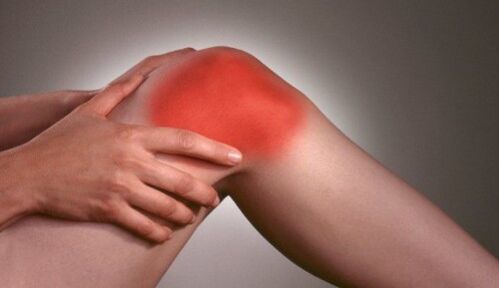
The symptoms of osteoarthritis of the knee joint are basically the same and appear in almost all patients.Patients also note that the pain worsens in spring and autumn and depends on weather changes.The main symptom of the disease is knee pain.Most of the time, it does not appear immediately, but is only noticeable after a long walk and appears in the late afternoon.In the morning there may be stiffness in the knee when moving.If minor symptoms are not attended to, the disease can progress and bring extremely undesirable results to the patient.Despite the main symptoms, there are several other signs of the disease:
- pain in a calm state, which qualitatively decreases when walking;
- limited movement of the knee joint and difficulty controlling its mobility;
- stiffness of knee movement;
- increased sensitivity in the knee region;
- swelling in the knee joint area and swelling of the surrounding skin;
- deformity of the knee joint.
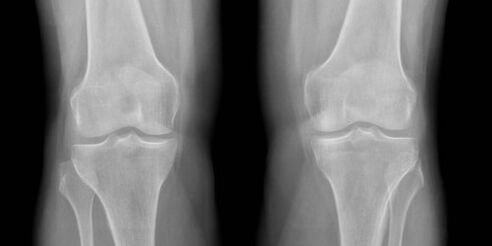
The condition of the knee joint is assessed by medical examination and x-rays.Furthermore, the disease stage of any osteoarthritis (including Coxathrosis, Gonarthrosis, Polyarthrosis and others) can only be determined through radiography and only a doctor can evaluate such conditions.Therefore, it is extremely important not to self-diagnose or jump to conclusions.
Degrees of gonarthrosis
1st degree
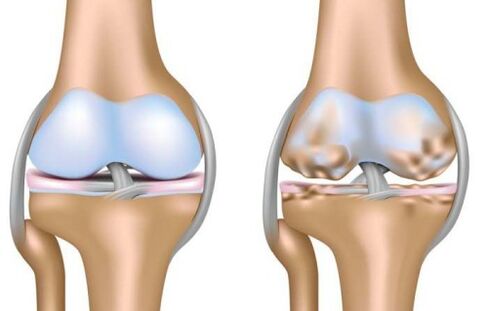
The knee joints have not succumbed to the deforming influence of the disease, but are manifested only by external signs and slight swelling of the periarticular skin, with noticeable changes in its color.At a physiological level, it is characterized by small changes in the hyaline cartilage.As a result of the accumulation of a significant amount of joint fluid in the synovix, small deformations of the joint occur, which are accompanied by pain when walking.Other signs such as limited mobility are not observed.And therefore, it is also difficult to track them on an x-ray.At this degree, the disease is difficult to diagnose, but if it is quickly identified, its treatment will be more effective than in the other or third degree of gonarthrosis, as well as in other types of arthrosis (coxarthrosis, polyarthrosis).
II degree
The main symptom is unbearable or intense pain even with small efforts, which intensifies when walking and lifting heavy objects.Over time, this will turn into difficulty bending the knee.At the physiological level, this is manifested by the fact that the volume of the cartilaginous layer decreases sharply and in some places is completely absent.Based on the results of x-rays, this degree can be determined by the marginal bone growths and the density of the joint space.When the joint works, especially when walking for a long time, a characteristic crunch appears.Gradually, the patient may lose the ability to bend the knee or it will be very difficult to do so.The deforming effect is already evident at this stage of the development of gonarthrosis, as well as other types of arthrosis (coxarthrosis, polyarthrosis).This is visually noticeable and the surrounding skin becomes rough and changes color.Treatment at this stage is best started comprehensively and intensively.Both medication and traditional treatment methods will be relevant here.
III degree
It is characterized by intense pain, even when the knee joint is inactive or immobilized.The deforming effect is very noticeable and significant changes can be visually seen in the structure of the joint and adjacent tissues.At a physiological level, it is marked by the absence of cartilaginous tissue and is easy to diagnose on radiography.Treatment of stage III arthrosis of the knee joint and other types of arthrosis (polyarthrosis, coxarthrosis) is a practically irreversible process.On the contrary, the main objective of this treatment will be to reduce pain and eliminate some symptoms of the disease.